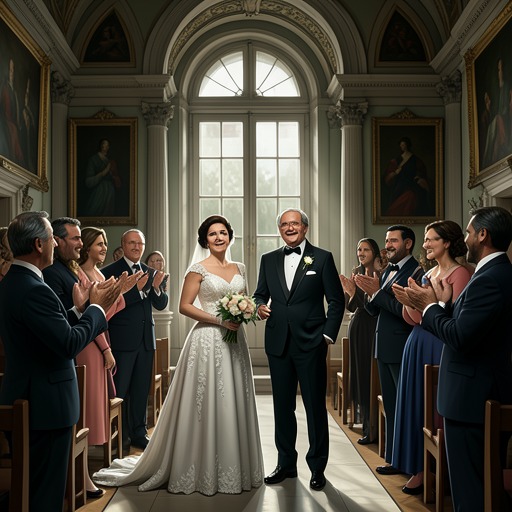
Pentecost morning, decades after his arrival in the city
Jeremiah’s Planned Death
At seventy, Jeremiah de Saint-Amour carries out a decision he had made years earlier: he dies by cyanide in his photography laboratory, with his Great Dane beside him. The old soldier and photographer leaves a note asking the police to be informed and a sealed letter for [Juvenal Urbino](entity:character-recall-character-juvenal-urbino-4d1dd2e65d4e).
Urbino identifies the death as suicide and arranges a discreet burial, but the letter’s revelations unsettle his understanding of his friend. The opening death sets old age, memory, and the right to choose one’s end against the novel’s long inquiry into love.
Pentecost morning
The Unfinished Chess Game
Before leaving the laboratory, Juvenal studies the unfinished chess game beside Jeremiah’s body. The position shows that Jeremiah had been about to lose in four moves, an unusual lapse for a player who habitually finished every game.
The detail leads Urbino to wonder why his friend abandoned the board at the end of his life. It also recalls the friendship they built through chess and leaves a small mystery alongside the larger revelation contained in Jeremiah’s letter.
Pentecost morning
The Letter’s Revelations
Urbino opens the sealed letter and reads its first pages in Jeremiah’s darkened house. The account changes his view of the friend he had regarded as an atheistic saint: Jeremiah had a hidden lover, a criminal past in [Cayenne](entity:location-recall-location-5507c7ecad99), and a settled plan to end his life at seventy.
The letter directs Urbino to the woman who shared Jeremiah’s last years. Its disclosures trouble him not simply because they expose private facts, but because they force him to reckon with how much a life can be concealed even from its closest companions.
Pentecost morning
The Lover Behind the Door
Following the address in the letter, Urbino visits Jeremiah’s lover in the old slave quarter. She explains that she met Jeremiah in [Port-au-Prince](entity:location-recall-location-f224c41983c4) and had spent half her life with him in a discreet relationship that the city never recognized.
She knew his plan and helped him endure his final months, refusing to report him because she loved him. Her calm resolve challenges Urbino’s moral judgment and reveals a private attachment that had survived outside the conventions of marriage and public respectability.
The night before Pentecost
The Last Night Together
The woman recounts that she and Jeremiah went separately to the cinema, then met afterward in his laboratory. They played chess; he had the white pieces and was losing, but she says he had moved without love. He then asked to be left alone to finish his letter.
Before she departed, Jeremiah asked her to remember him with a rose. She returned home, waited through the night, and cut a rose at dawn, keeping the promise even as she accepted that his chosen death could not be turned aside.
Pentecost morning
A Saint Without the Church
Urbino declines to ask the Archbishop to allow Jeremiah burial in consecrated ground. He calls his friend an atheistic saint but leaves judgment of the matter to God, while arranging a burial in the section reserved for suicides.
The decision shows the tension between Urbino’s religious identity and his affection for a man who lived beyond the Church’s rules. He also resolves to preserve Jeremiah’s photographic negatives, especially the portraits of children that record a generation and the city’s future.
Pentecost morning
The City of Memory
On the way to his next appointment, Urbino travels through the poor, flood-prone quarter and reflects on the city he loves. Its rotting waterways, crowded marshes, and old colonial grandeur stand beside the lively markets and celebrations of its working people.
He recognizes that the city of his nostalgia was never quite the city as it existed. The landscape makes visible the class divisions and public-health failures that have shaped his life’s civic work, and it echoes the novel’s persistent conflict between memory and reality.
Pentecost morning
The Parrot Escapes
At home, servants cannot retrieve the family parrot from the top of the mango tree. The bird has escaped while his wings were due to be clipped, and Urbino summons the new [fire department](entity:organization-recall-organization-4de7e0deccac), a civic institution he helped establish.
The rescue effort becomes a domestic commotion, with hoses damaging the house and the tree. Urbino’s insistence that nothing that cannot speak should enter the home had once allowed the parrot inside; now the bird’s escape draws him toward the fatal accident waiting later that afternoon.
Several decades before Pentecost
The Soap Quarrel
In the early years of their marriage, Fermina discovers that Juvenal has been bathing without soap and angrily insists she has kept the bathroom supplied. He leaves to live at the hospital, while she refuses to concede that she forgot to replace it.
Their silence lasts for months and draws out a catalogue of old grievances. The reconciliation comes when Juvenal returns to their bed and admits that there was soap. The quarrel becomes a lasting example of how ordinary domestic irritations can threaten a marriage more effectively than grand disasters.
The years leading up to old age
A Marriage Made of Habits
As Juvenal grows frail, Fermina gradually takes over dressing and bathing him. Their mornings, once full of feigned annoyance and playful battles over sleep, become a routine of care; each depends on the other without deciding whether love or convenience is the stronger bond.
Their shared life includes tenderness, irritation, and carefully maintained rituals. Looking back from old age, the novel presents marriage not as a permanent state secured once and for all, but as a relationship rebuilt through daily attention and endurance.
Pentecost morning
Urbino Faces Mortality
Standing over Jeremiah’s corpse, Urbino recognizes death as a physical presence rather than an abstract certainty. He has spent his professional life fighting disease and helping patients die without fear, but his friend’s body forces him to imagine his own ending.
The letter deepens the shock: Jeremiah’s chosen death makes Urbino question both his friend’s hidden life and the moral meanings he had assigned to it. He carries the unease into the rest of the day, even as he follows the habits that have given his own life order.
From Urbino’s return from Europe to his final years
A Life of Civic Service
After returning from medical studies in Europe, Juvenal becomes a force in the city’s public life. He promotes sanitation, modern medicine, education, arts, and civic institutions, while retaining a privileged position among the old families.
His achievements coexist with a reputation for self-importance and an attachment to ceremony. The contrast between public accomplishment and private vulnerability becomes increasingly important as the story follows his marriage, his aging, and the accidental death that ends his career.
The epidemic in Urbino’s youth
The Cholera Inheritance
The earlier cholera epidemic kills a quarter of the city’s urban population in less than three months, including Urbino’s father, Marco Aurelio. His father directs emergency measures and dies after isolating himself in the hospital, leaving a final letter to his family.
The loss turns cholera into an obsession for the younger Urbino. He studies the disease in Europe and returns determined to prevent another catastrophe, carrying both scientific purpose and a son’s unresolved grief into his medical work.
Less than a year after his return from Europe
Urbino Contains an Outbreak
When a patient arrives with signs of cholera, Urbino recognizes the disease and alerts the authorities. A cluster of cases follows, but quarantine and close supervision prevent the outbreak from becoming another citywide epidemic.
His response wins respect for sanitary measures and strengthens calls for sewers and a modern market. Yet the professional victory is soon overshadowed by a personal upheaval: a supposed cholera case brings him into the household of [Fermina Daza](entity:character-recall-character-53114d9ffa6a).
When Fermina is thirteen
Florentino’s First Glimpse
A young Florentino Ariza delivers a telegram to Lorenzo Daza’s house and glimpses Fermina through the sewing-room window as she reads with her aunt, [Escolástica](entity:character-recall-character-ccdfddae9d9e). The chance sight begins an attachment that will govern Florentino’s emotional life for decades.
He learns that Fermina attends the Presentation Academy and begins watching her walk to school. At first she regards him with curiosity and pity; her aunt recognizes the young man’s devotion and quietly helps the two adolescents approach one another.
The months after their first meeting
The Secret Letter
Florentino wrote a long and poetic letter to Fermina, but his mother, Tranquilo, advised him to put the letter away and take a more restrained approach. Escarceita helped the young people create opportunities to communicate secretly without being noticed by Lorenzo. Fermina accepted a brief declaration
During the first months of their courtship
Love Resembles Cholera
While waiting for Fermina to reply, Florentino had no appetite, vomited, fainted, and even longed to die. His godfather diagnosed that the symptoms of love were similar to those of cholera
The first year of their courtship
The Crowned Goddess Waltz
Florentino composed a waltz for Fermina and played it for her at the place where the wind could carry the music to her bedroom. Their letters and this piece became symbols of the emotional bond maintained by secret and imagination. The piece remained after their youthful love had ended; many years later
After nearly two years of correspondence
The Marriage Proposal
Florentino formally proposed to Fermina. She delayed her answer for several months, finally agreeing, but with the condition that he promised not to let her eat eggplant. They kept their engagement a secret, intending to formally propose again later, and agreed to wait for a while, letting each other
During Fermina’s school years
Lorenzo Discovers the Letters
A teacher discovers that Fermina is writing letters to Florentino. The college then expels her. Lorenzo searches through her belongings and finds letters over the years. He sends his daughter away; he believes it must be cut off before this affair destroys the future he had arranged for her. Escor
After the expulsion from the Academy
The Journey Through the Province
Lorenzo takes Fermina on a donkey and sail, struggling through the region where her family originated. She endures the hardships of the journey and knows she is separating from her lover; but her cousin Hildegard in Bayardu Par welcomes her, letting her blend into the lively family
During Fermina’s absence
The Sunken Treasure Scheme
Florentino believed that the boys who dive for coins could find the SS Josefa and its treasure. He hired [Euclides](entity:character-recall-character-euclides-8aa8108419d8) to go out searching, hoping to bring wealth to Fermina; but the boys' claimed discovery was unreliable, and eventually, they disappeared. This failed expedition introduced Florent
After about a year and a half away
Fermina Returns Home
About a year and a half later, Lorenzo took Fermina back to the city. The journey made her mature, and she began to take charge of practical matters at home. She searched for Florentino, but there was no agreed-upon way to contact each other; Florentino did not
Shortly after Fermina’s return
The Arcade Rejection
At the letter-writing archway, Fermina turned around and found Florentino following closely behind. His pale and terrified face broke the ideal image she had built around him, and she realized their love had become a illusion
Several years after Fermina and Florentino’s separation
Urbino’s Return from Europe
Uverno Urpino studied medicine in [Paris](entity:location-recall-location-paris-c02b439ce220) and returned to his hometown, but found that the city was more poor, dirty, and dilapidated than he remembered. His father had died of a cholera epidemic, and his home was in disrepair. Urpino devoted himself to modern
In Urbino’s first years back in the city
The Waterworks and the Market
Urbino promoted improvements in water supply, construction of sewer systems, collection of garbage, and building of covered markets, while opposing local customs and superstitions. The city's open drainage ditches, stagnant water pools, and markets filled with garbage made cholera a continuous threat
During Urbino’s renewed cholera vigilance
The First Examination
A doctor asked Urbino to examine Fermina because she suspected she had cholera. Urbino found out she had only a gastrointestinal infection; the young woman's composure and beauty left a deep impression on him, although he insisted his attention was purely professional. Fermina thought he was an arrogant doctor
Soon after Fermina’s illness
Urbino Begins His Courtship
Urbino tries to win Fermina's attention through visits, letters, and piano nocturnes. Lorenzo encourages this relationship, while Fermina resists Urbino's confidence and the upper-class life he represents. In the end, she agrees to let Urbino speak with her father. Her decision
After Fermina accepts Urbino’s courtship
Florentino Sent Away
The news that Fermina was about to marry Urbino came, and Florentino was devastated. His family arranged for him a job as a telegraph operator in Villadela Valle, to keep him away from the city and away from the news about Fermina. He set off without telling his
During Florentino’s first river journey
Rosalba on the Riverboat
On the river boat, a woman entered Florentino's cabin at night and took his virginity. Later, he suspected that the woman was [Rosalba](entity:character-recall-character-rosalba-8b03400608d3)—she was traveling with two other women, and the boat was carrying a child confined in a bamboo cage—yet he could never confirm it
After Florentino returns to the city
The Widow Nazaret
During a wartime siege, the [Widow Nazaret](entity:character-recall-character-widow-nazaret-884d6b7f2c23) takes refuge in Florentino’s home. Their encounter begins a long, intermittent affair that offers him pleasure and companionship without replacing Fermina in his mind.
The widow’s openness about desire teaches Florentino that love and sexual life do not always conform to the formal rules he has imagined. He continues to see her for years, but their relationship remains one among many in a life organized around the hope of Fermina’s eventual return.
During the civil-war years
The Widow’s Liberation
After the death of her husband, the [Widow Nazaret](entity:character-recall-character-widow-nazaret-884d6b7f2c23) abandons mourning and begins a life of sexual independence. She and Florentino meet without promises, and she tells him she is happy because she now knows where her dead husband is when he is away.
Her example becomes part of Florentino’s education in the varied forms of love and widowhood. He later imagines that Fermina, too, might be liberated by becoming a widow, turning other women’s lives into a private rehearsal for his own hope.
From young adulthood through middle age
The Affairs of a Secret Hunter
Florentino pursues many women while continuing to think of Fermina as the one woman who matters most. He records long affairs in a coded ledger, known as [Women](entity:object-recall-object-fd5c615ffe97), and keeps his encounters secret, treating discretion as essential to his identity.
His experiences range from short-lived encounters to enduring relationships. They satisfy some needs and offer moments of tenderness, but none changes his conviction that he is waiting for Fermina rather than beginning a life with someone else.
During Florentino’s years as a river-company employee
Ausencia Santander’s Lesson
Florentino begins an affair with [Ausencia Santander](entity:character-recall-character-ausencia-santander-48e4f8ad4f5b), whose confident sensuality overturns his theories about women and sexual pleasure. Their relationship lasts for years, conducted in the house she shares with a riverboat captain.
The affair ends when thieves empty the house while the lovers are together, leaving a message on the wall. Florentino continues to visit, but his attention is increasingly drawn to the opportunities of the trolley and to the lives that pass through the city around him.
During Florentino’s middle years
Sara Noriega’s Affair
Florentino meets [Sara Noriega](entity:character-recall-character-sara-noriega-4be0c934b9e1) after a poetry festival and begins a long affair with the schoolteacher and aspiring poet. Their relationship combines sex, poetry, and the daily intimacy of a hidden life.
Sara’s blunt judgment of Fermina’s marriage and social ascent wounds Florentino, who cannot bear to hear the woman he loves described as a mercenary. Their quarrel ends the affair, and the renewed loneliness revives his fixation on Fermina and his wish for Urbino’s death.
At an early Poetic Festival
The Golden Orchid Controversy
At the [National Theater](entity:location-recall-location-national-theater-6eed1a426791), Fermina announces the [Golden Orchid](entity:object-recall-object-golden-orchid-53027c569b9c) winner: a Chinese immigrant whose sonnet astonishes the audience. Florentino, who has secretly entered the competition hoping Fermina will recognize his work, loses the prize.
A richly dressed woman beside him notices the flower trembling in his lapel and understands his disappointment. Her sympathy leads to an affair, but the episode also captures Florentino’s persistent habit of placing his private hopes inside public events where Fermina may appear.
During the years of Florentino’s work at the river company
Olimpia’s Pigeon Letters
Florentino meets [Olimpia Zuleta](entity:character-recall-character-olimpia-zuleta-c0d7a01582dd) when he gives her a ride during a storm and later sends her a carrier pigeon with an unsigned love note. She returns it, asking him to stop hiding behind anonymity, and their courtship develops through messages carried by the bird.
The affair becomes one of the rare occasions when Florentino leaves written evidence of his desire. He does not know that the sign will become dangerous, and the romance ends in violence before he understands the consequences.
After several months of courtship
Olimpia’s Murder
Florentino paints a possessive message on Olimpia’s body with red paint. Her husband sees it after she undresses and kills her with a razor.
The murder terrifies Florentino because his signed letters could expose him, but even more because Fermina might learn of his infidelity. He keeps track of the murderer’s imprisonment and carries the episode as a warning of how secrecy can fail catastrophically.
As Florentino advances in the river company
Tránsito Loses Her Memory
Tránsito’s memory begins to fail. She confuses customers and their affairs, eventually liquidates her lending business, and later becomes unable to recognize her son or remember who she is.
Florentino cares for her through the decline, even reshaping the old shop to make a room suited to the identity she has adopted. Her fading memory sharpens the novel’s concern with the loss of self and leaves Florentino increasingly alone after her death.
During Florentino’s long career at the river company
Leona Cassiani’s Rise
Florentino helps [Leona Cassiani](entity:character-recall-character-leona-cassiani-43e02c90cbd1) obtain a low-level job after meeting her on the trolley. She proves capable of diagnosing the company’s administrative failures, and Leo XII makes her his personal assistant.
Leona gradually becomes a powerful, discreet manager who helps Florentino rise through the company. Their relationship is marked by loyalty and affection without sex; when he finally asks whether they might become lovers, she tells him she has waited too long and loves him as the son she never had.
After decades of Florentino’s service
The Company’s New President
Florentino rises through the River Company under the guidance of Leo XII, learning every part of the business despite his difficulty writing ordinary commercial prose. Leo XII eventually names him his successor and leaves him in control of the company.
Florentino’s career gives him wealth and status, fulfilling the material ambition he set for himself after seeing Fermina with Urbino. But success does not displace his original purpose: he still expects to win Fermina once her husband is gone.
During Florentino’s career at the river company
The Chinese Poet’s Victory
A Chinese immigrant wins the [Golden Orchid](entity:object-recall-object-golden-orchid-53027c569b9c) with a sonnet that the crowd first assumes must be a joke. The poem’s excellence silences the audience, though the poet dies without persuading his city that he wrote it himself.
Florentino remembers the festival partly through his own defeat and the woman who comforted him afterward. The episode reflects the city’s uncertain judgments about class, identity, and artistic authority, as well as the secret hopes he repeatedly attaches to Fermina’s public appearances.
At the turn of the twentieth century
The First Balloon Mail Flight
Juvenal and Fermina join the first balloon journey carrying mail to [San Juan de la Ciénaga](entity:location-recall-location-san-juan-de-la-ci-na-7ac28f9e4e68). The flight passes over [Cartagena de Indias](entity:location-recall-location-cartagena-de-indias-9d0f441e93dd) and the Great Swamp, where Urbino sees bodies in the banana region and recognizes signs of killings hidden behind claims of disease.
The public spectacle displays Urbino’s civic ambition and Fermina’s appetite for experience. Florentino watches from the crowd, measuring time through the changing image of the woman he has never stopped loving.
After Fermina’s marriage
The Paris Honeymoon
Fermina and Juvenal travel to Europe, where the first nights of marriage are shaped by her fear and seasickness rather than by the violence she had imagined. Juvenal moves carefully, speaking with her and allowing trust to develop at her pace.
Their physical intimacy grows into affection, and they eventually return home expecting a child. The honeymoon becomes the foundation for a marriage neither began in love but which, over time, acquires its own durable form.
After Urbino’s courtship and before their European honeymoon
The Wedding of Fermina and Juvenal
Fermina marries Juvenal in a grand [Cathedral](entity:location-recall-location-2beacd5a3736) ceremony attended by the country’s elite. Florentino is away on the river, ill with grief and unable to intervene in the life she has chosen.
The marriage joins Fermina to the city’s most eligible doctor and brings the social security her father wanted for her. Yet the wedding does not settle the question of love; it begins a complicated life in which the couple must build attachment through habit, disagreement, and reconciliation.
The early years of Fermina’s marriage
The Palace of Casalduero
After the honeymoon, Fermina finds herself living in the Urbino family palace under the authority of her bitter mother-in-law, Doña Blanca, and her withdrawn sisters-in-law. She feels trapped by the house, the household customs, and a husband who does not initially confront his mother.
Fermina takes refuge in her newborn son and gradually discovers that affection can grow through the work of raising a child. The early marriage is marked by loneliness and class conflict, despite the couple’s polished public image.
During the early years in the Urbino palace
The Eggplant Household
Doña Blanca insists on serving eggplant, which Fermina despises, and requires her to learn the harp as a mark of a respectable woman. Fermina submits to these demands while resenting the conventions that have taken control of her life.
The disliked dish later becomes a symbol of the ways domestic life changes. Years afterward Fermina discovers that she enjoys eggplant, a small but telling sign that time and experience have transformed what once seemed impossible to accept.
After several difficult years of marriage
The Urbinos Reconcile
Fermina reaches a breaking point in the palace and forces Juvenal to confront the misery she has endured. They talk through the night, weep together, and agree to leave the family house and seek the love they have lost.
The decision leads them toward a more independent household and a renewed partnership. Their marriage is not restored by a single romantic gesture, but by an honest reckoning with the conditions that had made them unhappy.
After the Urbinos’ reconciliation
The Dazas’ Move to La Manga
Fermina and Juvenal establish a home in [La Manga](entity:location-recall-location-la-manga-fd578ffc4f16), where she becomes the decisive manager of the household and fills the house with animals, flowers, and objects gathered on their travels. Their children grow up, and the couple develops a stable rhythm of public service and domestic life.
Their marriage becomes both companionship and labor. Fermina understands that she has entered a life built largely around her husband’s needs, yet the two acquire an intimacy made from years of shared rituals and recovered affection.
During the Urbinos’ life in La Manga
The Parrot’s Place in the House
After a robbery, Fermina brings home a speaking parrot despite Juvenal’s dislike of animals. The bird earns his place by frightening off thieves with an imitation of a barking dog, and Juvenal eventually becomes its devoted teacher.
The parrot becomes a household favorite and an unlikely companion to the aging doctor. Its intelligence and independence set in motion the chain of events that will end Urbino’s life on [Pentecost](entity:time-recall-time-pentecost-e50b607e6318).
During Florentino’s early years of longing
The Galleon’s True Route
Florentino studies the history of the San José and hires [Euclides](entity:character-recall-character-euclides-8aa8108419d8) to search for the wreck. Euclides claims to find the sunken vessels and their treasure, but the evidence proves too extravagant to trust, and the boy vanishes.
The failed search becomes one of Florentino’s youthful attempts to transform love into wealth. The imagined treasure remains a figure for the riches he believes he must acquire before he can deserve Fermina.
Around the turn of the twentieth century
The Trolley and Hidden Loves
Florentino’s work and private life expand as the city changes, including the arrival of the mule-drawn trolley. He uses its routes to meet women and continues a succession of concealed affairs, always guarding his public reputation.
These encounters provide companionship and sexual experience but deepen the split between his outwardly solemn identity and his private life. He remains convinced that no affair can release him from his promise to Fermina.
After Fermina’s return from Europe
The Bride in the Crowd
Florentino sees Fermina leaving Mass with Juvenal and recognizes that she has become a confident society woman. She is pregnant, and the couple appear harmonious, moving through public life as if they belong together.
The sight renews Florentino’s resolve to become wealthy and respected enough to win her. He does not treat her marriage as final; instead, he begins to imagine that Urbino will die and that Fermina will eventually become his.
From Fermina’s marriage until Urbino’s death
Florentino’s Long Vigil
For decades, Florentino watches for Fermina at ceremonies, churches, and public events, taking note of each change in her appearance and each sign of aging. He builds his career, maintains his health, and waits for the moment when she might be free.
His loyalty is inseparable from illusion: he has many lovers but regards himself as emotionally reserved for Fermina. The passage of time is measured not only by his own body but by the changing woman he sees from a distance.
The first years of Fermina and Juvenal’s marriage
A Wedding and a New Life
Fermina and Juvenal settle into a marriage that grows beyond the uncertainty of its beginning. Their son and daughter become central to their lives, and the couple travels, hosts cultural events, and becomes a fixture in the city’s public world.
Their happiness is imperfect but lasting. Their shared life includes arguments and boredom as well as affection, and the novel presents its durability as an achievement rather than a romantic certainty.
During Florentino’s years of romantic wandering
The Carnival Encounter
During [Carnival](entity:time-recall-time-carnival-f0850ba910f9), Florentino meets a young woman who says she is mad and dances with startling freedom. She is recaptured by attendants from the asylum after escaping and killing a guard.
Florentino continues bringing chocolates to the asylum, hoping to see her, but never does. The brief encounter becomes one more lost possibility in a life full of desire and missed connections.
During Florentino’s early years at the river company
The Wrong Assumption About Leona
Florentino mistakes [Leona Cassiani](entity:character-recall-character-leona-cassiani-43e02c90cbd1) for a prostitute and turns away from her when she approaches him. He later learns that she wanted a job, not an affair, and helps her enter the river company.
His mistake becomes the foundation of a deep friendship and professional partnership. Leona’s eventual influence in the company surpasses her formal position, while neither of them forces their mutual affection into a sexual relationship.
After years of working together
The Unreturned Love of Leona
Late one evening, Florentino asks Leona when they will stop keeping their feelings at a distance. She reveals that she has waited for him for years, but now she feels too old to become his lover and would feel as though she were sleeping with a son.
Florentino accepts her answer without pressure. The exchange teaches him that intimacy need not culminate in sex, and their friendship continues without bitterness.
When Urbino is about fifty-eight
The Affair with Barbara Lynch
Juvenal meets Barbara Lynch, a theology teacher with a troubled marriage, during a medical visit. Their attraction becomes a secret affair, though their encounters remain hurried and constrained by his public standing and fear of scandal.
Urbino’s infidelity destabilizes the household and changes his behavior. He is consumed by desire and guilt, while Fermina begins to suspect that something is wrong through the unfamiliar scent on his clothes.
After several months of Urbino’s affair
Fermina Detects the Betrayal
Fermina’s sense of smell leads her to recognize a strange odor on Juvenal’s clothes. She examines his medical notes and watches his routine, increasingly convinced that he is hiding an affair.
When she finally confronts him, Urbino does not deny the truth. He ends the relationship and goes to confession, but the confession itself wounds Fermina: she believes that a private betrayal between spouses has been exposed to a religious authority.
After the confrontation about Barbara Lynch
Fermina Leaves for Flores de María
Fermina left the city and went to San Juan del Puerto, then to the estate of Hildebrand in the garden of Maria's flowers. She told her family that she left to change her environment, but she did not know if she would return
Nearly two years after Fermina’s departure
The Urbinos Reunite
Uvener learned that Fermina was homesick and could not overcome her pride, so he set out for the flower of Maria. When he arrived, she was preparing eggplant; upon seeing him, she was overjoyed. She went back home with him, but still determined to make him
Almost two years after Fermina’s return
Cabiria’s Long Screening
At the screening of "Cabaret," Florentino heard Fermina's voice behind him and realized she was sitting near Uvina. After the movie ended, the four of them greeted each other; Florentino noticed that Fermina had aged, and her husband still had to help her down
After the screening of Cabiria
The Unclaimed Love of Leona
When Florentino and Leonora were walking home, they almost confessed their secret love for Fermina. He finally went to Leonora's house, and the close atmosphere between them momentarily moved him, but she explained that she had been waiting all her life for that stranger who had raped her, and
Pentecost afternoon
The Bells for Urbino
On the day Jeremiah died, Florentino was with Amalia Bicuona. Suddenly, the bell of the cathedral rang. He learned that [Juvenal Urbino](entity:character-recall-character-juvenal-urbino-4d1dd2e65d4e) had fallen from a ladder trying to catch a parrot and had died
Pentecost Sunday, shortly after four in the afternoon
Urbino’s Fatal Fall
Julian climbs the ladder to reach the parrot on the mango tree. The ladder slips; he briefly grabs the parrot and falls to his death, unable to receive the communion or say goodbye
The day after Urbino’s death
The Funeral of Juvenal Urbino
Fermina refused the official request for a public ceremony and kept vigil at home. She reattached her wedding ring to Juvenal's hand, saying they would soon meet again, and faced the funeral with restrained determination, concealing her sorrow. Florentino helped with household affairs and the vigil
The night after Urbino’s funeral
Florentino Renews His Vow
When Fermina found Florentino in the living room, he announced to her that he had waited more than half a century to recommit himself to a vow of faithfulness and eternal love for her. She was furious, thinking it was despicable of him to say such things on the night her
The first weeks of her widowhood
Fermina Clears the House
Fermina cleared out everything in her house that made her think of Juvenal, gave away the furniture, and burned his clothes and belongings. This ritual temporarily comforted her, but memory was more enduring than the things she destroyed. For decades, her identity had been closely tied to marriage
A few weeks after Urbino’s funeral
Fermina’s Angry Letter
Fermina's thoughts towards Florentino grew stronger, eventually turning into anger. She sat at the desk of Juvenal and wrote a letter full of insults to Florentino, hoping to rid herself of the memory of his declaration. Florentino saw this letter as a signal for her
The year after Urbino’s death
Letters on a Typewriter
Florentino learned to use a typewriter and began writing a series of carefully worded letters to Fermina. He did not mention their young love, but instead talked about relationships between people and the experiences of growing old. Fermina, out of curiosity, read the first letter, and then continued
During Florentino’s renewed letter campaign
América’s Abandonment
Florentino told Amalia Bicuña he intended to get married, and then began to distance himself from their sexual relationship. He arranged other activities for her, making her more lonely; at this time, he was fully focused on waiting for Fermina to reply to his letters
One year after Urbino’s death
The Memorial Mass Reunion
At the funeral mass for Juvenal, Florentino appeared without being invited. Fermina passed through the church to thank those coming to pay their respects, and arrived at the poor's seat to find him
After the memorial Mass
The First Visit
Florentino visited Fermina's house, but suddenly had an attack of intestinal pain and had to leave almost immediately. Fermina was confused by his embarrassment, but agreed to meet him again two days later. This awkward first meeting showed that the former lovers knew almost nothing about each other now. It
In the months after Florentino’s first visit
The Tuesday Visits
Florentino visited Fermina's house regularly. They talked about daily matters, gradually getting used to each other's company, and established the custom of having tea and talking every week; sometimes they also played cards with her son and daughter-in-law
During the early Tuesday visits
The White Rose
Florentino brought Fermina a white rose, carefully removing the thorns, because he was concerned that a more symbolic flower might offend her. She did not scold him, accepted the flower, and thereafter, every week when they met, she would prepare a vase. Florentino mentioned that
Several months into the renewed visits
A Son’s Approval
Doctor Urbino Dasa invited Florentino to a lunch at the social club and thanked him for accompanying his mother. He also spoke about the many limitations and humiliations of old age, implying that the elderly should live together with people of the same age. Florentino humorously answered and understood
During Fermina’s widowhood
The Affair Rumor
a newspaper published a fabricated story claiming that Juvenal had an affair with Lucretia del Rial del Obispo. this accusation damaged the friendship between Fermina and Lucretia. Lucretia no longer visited, and this made Fermina angrily realize the hypocrisy in her social circle
After the newspaper attacks on Fermina’s family
The Truth About Lorenzo
A newspaper revealed the severity of Lorenzo da Sa's fraudulent activities, including forged currency and illegal transactions. Fermina had always considered the accusations against her father as defamation, but new evidence made her reevaluate this person who shaped her entire life
During Fermina’s later widowhood
Ofelia’s Intervention
Ophelia comes from New Orleans to oppose her mother's relationship with Florentino, calling it revolting for someone of her age to talk about love. Fermina refuses to accept her daughter's judgment, orders her to leave the house, and vows that as long as she is alive
After Fermina’s quarrel with Ofelia
The River Invitation
Fermina felt out of place at home and claimed she wanted to leave and never return. Florentino proposed a boat trip. This time she decided to go, arranged the journey herself, and refused to bring anyone along to supervise. This journey allowed Fermina to escape the pressure of family and
July 7, after Fermina’s widowhood
Aboard New Fidelity
Fermina boarded the new Loyalty Ship and checked into the presidential suite. Florentino also accompanied her, although he booked a regular cabin; this surprised her son, as he didn't expect Florentino to travel with them. This river ship became a private meeting place for the two
The first night aboard New Fidelity
Hands in the Darkness
The first night, Fermina and Florentino sat side by side on the dark observation deck. She spoke of Juvenal in the present tense, recalling the contradictions in their long marriage; Florentino just listened, not demanding that she erase the husband's existence. They held hands and realized
The first days of the voyage
The River They Remember
Florentino and Fermina saw that the [Magdalena River](entity:location-recall-location-56c3319529c2) had changed greatly. The forest had been cut down, used to provide fuel for steamboats; animals had disappeared, and the once lively port had become quiet or decayed. This scene disturbed the landscape they remembered and revealed the consequences of
Early in the upriver voyage
A Night of Pain and Nearness
As the ship traveled upstream along the hot, ruined river valley, Fermina's earache worsened. Nevertheless, she and Florentino spent long nights together, talking, sharing cigarettes, and gradually getting used to each other's company
During the first week of the voyage
América Vicuña’s Death
A telegram was delivered to Florentino, informing him that Amalia Bicuona died after taking opium. She failed her exam, and later was found dead, without leaving any note explaining why. Florentino realized he had neglected his responsibilities toward her, but suppressed his grief and refused
Several days into the upriver voyage
The Ship Runs Out of Wood
The new loyal ship was delayed due to a lack of boiler fuel wood. The passengers could only wait as the crew searched along the resource-depleted riverbank for wood, while the ship's cooling system also failed in the heat. This delay exposed the ecological destruction of the river and stripped away the comforts
During the stranded days upriver
Love in the Calamity
As the ship became increasingly hot and uncomfortable, Fermina and Florentino held hands for a long time, kissed, and slowly explored their feelings for each other. They drank anise wine, talked about their lives, and grew closer as they endured the inconveniences they encountered on the journey together
During the delay on the river voyage
Their First Night Together
Fermina and Florentino decided to have sex. She took off her clothes, not hiding her aged body; Florentino looked at her, both afraid and tender, seeing the real face of a woman he had idealized for decades. His body at first did not respond; he shame
On the return voyage
The Captain’s Secret Companion
In Radolada, Fermina is worried that she will be seen by strangers soon after her husband's death. Florentino convinces the captain to find a way to continue the journey, no longer carrying passengers or cargo. The captain Santamarino agrees to fly the cholera flag and sail
After leaving La Dorada
The Cholera Flag
The New Loyalty ship set sail with a yellow cholera flag, thus avoiding regular stops and duties. The ship's captain's companion boarded the ship, turning this journey into a floating celebration for everyone on board. This disguise allowed Fermina and Florentino to be alone, yet it also borrowed
The days after New Fidelity resumes its voyage
A Floating Celebration
There are no ordinary passengers on the ship. Fermina and Florentino spend the whole day playing cards, eating, talking, and resting. Fermina prepares meals for the crew, while Florentino plays a waltz they used to dance together on a small borrowed violin. Their common daily
During the cholera-flag voyage
A Manatee on the Bank
After staying on the ship for several days, Fermina's hearing improved and she began to pay more attention again to the remaining life in the river. At Tamaramek, the captain changed course, allowing her to see a sea cow nursing her calf
At the end of the return voyage
The Return to the City
When the new loyal ship approached the city, Fermina and Florentino had to face the prospect of leaving the secluded life on board. The stench of the river and the reappearance of familiar landmarks made the city seem both harsh and foreign to them after spending time together
Near the novel’s ending
Forever on the River
The captain asked how long they could still fly the cholera flag and sail back and forth. Florentino answered that he had been preparing for this answer for more than fifty-three years: forever